Euro games
Plan, build and compete for the best little economy, without anyone getting knocked out.
Hundreds of boxes, no titles on this page, and one colour-coded sticker system that tells you in a glance whether a game is gentle or ferocious.
Anything with a box, a rule book and a reason to say “just one more round.” We don't list titles on this site, because the shelf changes faster than a web page can keep up, so we sort by shape instead: how heavy a game is, how many people it seats, and whether the table plays together or against each other.
Every box carries a sticker. Green means you can learn it in five minutes, amber means a volunteer should sit in for the first round, and red means clear your evening and bring snacks. Newcomers should start with green, though one or two always insist on red, and one or two of those are right.
Cards turn up as parts of board games, in deck-building games and in the occasional co-op where the deck is the enemy. Dice show up almost everywhere. Miniatures live in their own cabinet and come out on Saturdays.
Weight isn't the same as quality. Some of the heaviest boxes on the shelf are the least played, because they ask for an entire Saturday and a table nobody else needs. Some of the lightest are played every week, year after year, because they take ten minutes to teach and thirty to finish.
People who hate losing are welcome too. The co-ops were made for them, and the competitive games all have a gentle rhythm: you spend most of the evening building something, and the final tally is less a verdict than a cheerful reason to start another round.
Table size matters too. The long tables seat six comfortably, the round ones seat four and argue, and the low coffee table by the sofa is reserved for two-player duels and anyone who prefers to play with their shoes off.
I walked in for a quick game and walked out three hours later, having learned a rule book with eleven kinds of tokens. Best Tuesday I've had in years.
If you're tired after work, ask for a co-op or a filler: the table does the thinking together, and nobody needs to remember more than three rules. If you've got a clear head and a free evening, try a euro game, where you plan a little economy and watch it wobble.
If you're not sure whether you'll like board games at all, Tuesday's learn-to-play night is built for you. One game, one teacher, two rounds, no pressure to buy anything or come back.
If you'd rather sit and watch for a while, that's fine too. There's a sofa by the shelf, a kettle that never seems to be empty, and someone will pull up a chair next to you sooner or later.
When the table has mixed experience, we play with a gentle handicap. Newcomers get a head start or an extra option, the veterans take on harder goals, and the teacher keeps score only if someone asks. Everyone finishes within a hair of everyone else, which is surprisingly hard to arrange and always worth the effort.
None of this is fixed. If the table wants to try a different idea, a variant from the rule book or a rule from last Tuesday's game, we try it. The shelf belongs to the people who use it, and the way we play changes as they do.
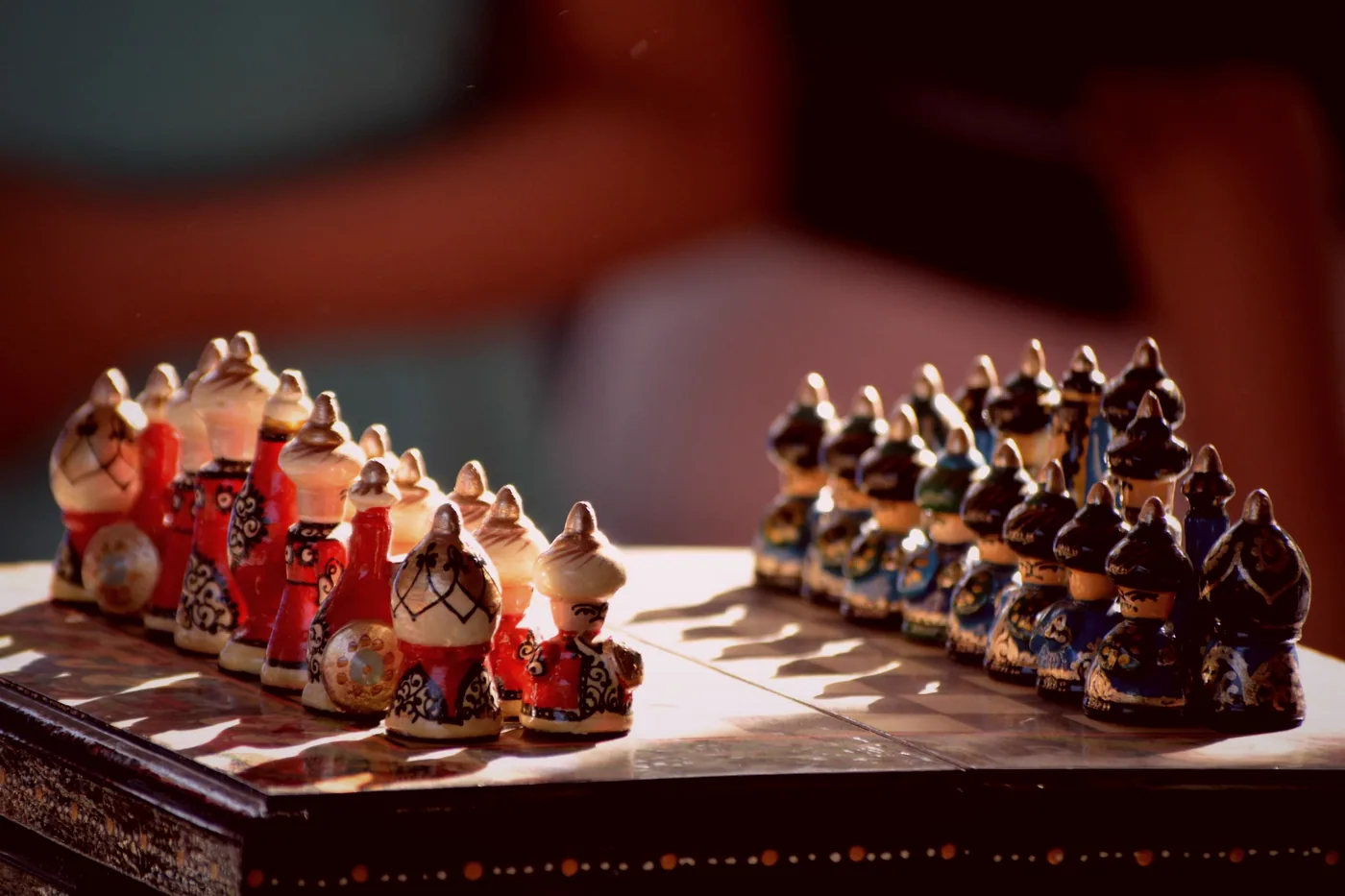
Plan, build and compete for the best little economy, without anyone getting knocked out.
One table against one game, and everyone shares the blame, the credit and the biscuits.
Twenty minutes, a handful of rules, no hard feelings and room for a second go.
Painted figures and measuring tapes, kept in their own cabinet, Saturdays only.
Controllers, a big screen and a pot of tea.